Seeing and being seen at night
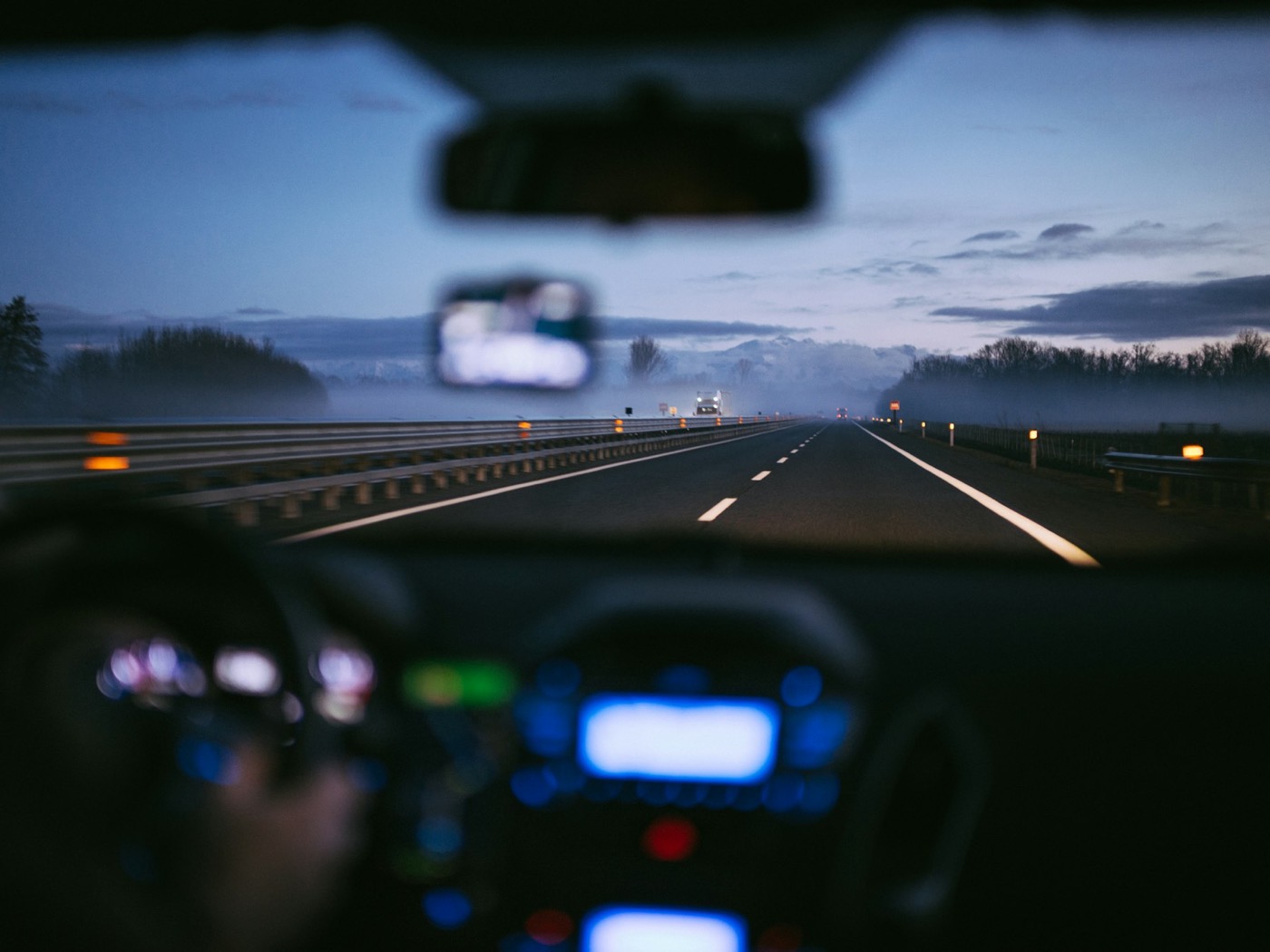
Clean glass, aimed headlights and a dimmed dashboard: small changes that make night driving easier on the eyes.
Night driving asks more of the eyes and less of them is available. Detail fades, glare from oncoming lights takes a moment to recover from, and tiredness arrives sooner. Some of the help is in the car and some is in how you drive it.
Clean everything you look through
A film on the inside of the windshield turns every oncoming headlight into a starburst. Clean the glass inside and out, wipe the headlight lenses and keep the mirrors clear. Glasses, if you wear them, deserve the same attention.
Light the road properly
Check that both headlights work and point evenly; a car with one dim headlight is easy to misjudge from the front. Use high beams on empty dark roads and dip them as soon as another car appears ahead or toward you.
- Windshield cleaned inside
- Both headlights working
- Dashboard brightness turned down
- Rest stops planned on long drives
Look after your own eyes
Turn the dashboard and screen brightness down so your eyes stay adjusted to the dark. When lights come toward you, look toward the right edge of your lane until they pass. If you notice yourself blinking hard or drifting, stop somewhere safe and rest.
This article is general information, not advice about your own car. Follow your owner’s manual and ask a qualified technician about anything you are unsure of.
// Road notes